
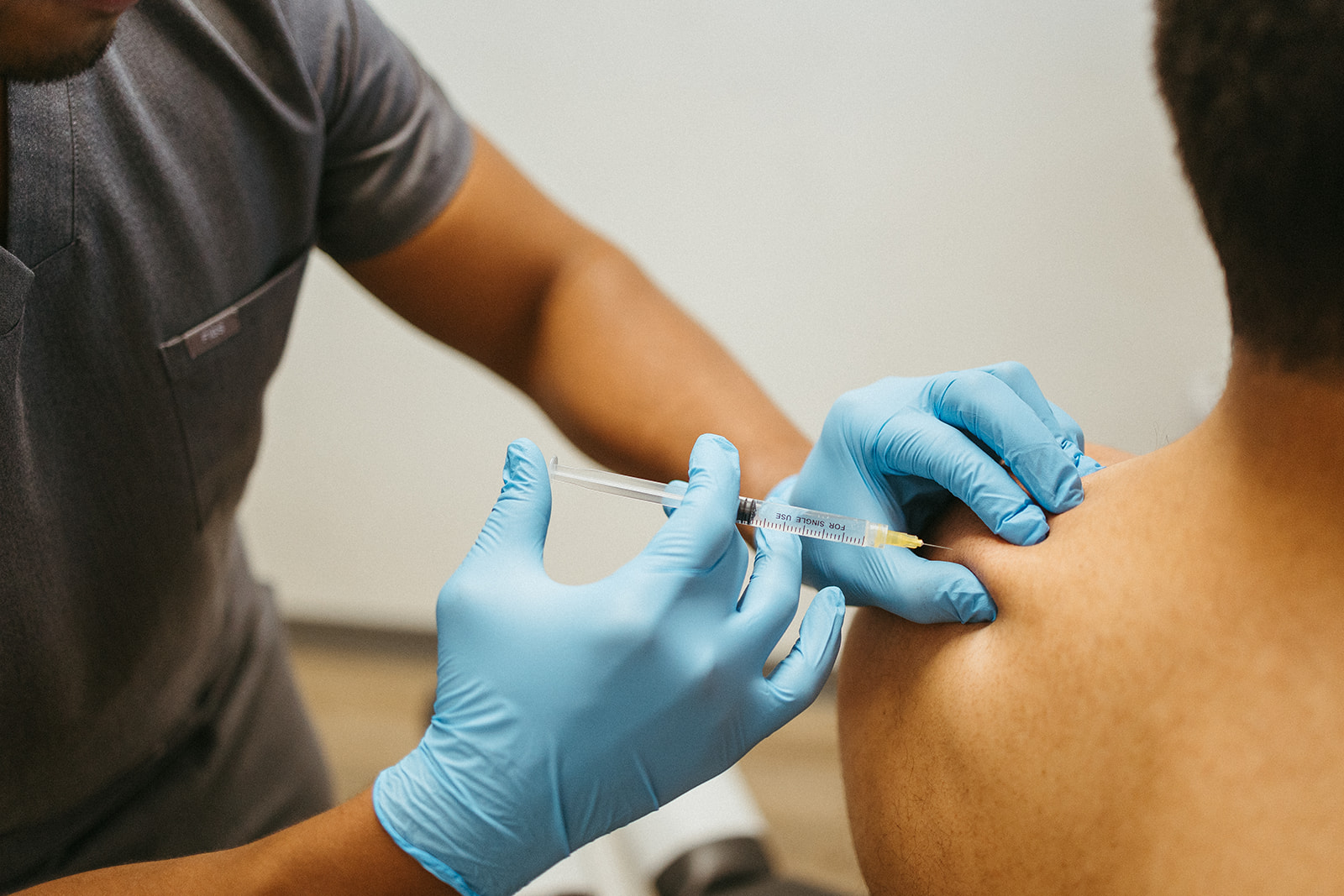
Pain management has traditionally revolved around surgical and pharmaceutical interventions, which are often invasive and/or come with a long list of side effects. However, regenerative injection therapy has come to the forefront of minimally to non-invasive pain management for its efficacy, relatively low cost (compared to surgical interventions), better safety profile, and accessibility.
How Perineural Injection Therapy Supports Healing
Perineural injection therapy (PIT)—a type of regenerative injection therapy—targets overactive nerves and works to calm irritation, reduce inflammation, and support tissue healing. It helps the body reset from pain cycles that upregulate the nervous system, making it an effective intervention in treating chronic pain.
It is specifically effective in alleviating pain associated with neuropathy, overuse injuries, and any type of lingering pain involving nervous tissue.
Small injections of 5% dextrose are administered around the affected nerves that are contributing to chronic pain. These superficial injections are designed to stimulate the body’s own ability to heal the surrounding tissues by reducing nerve irritation and improving nerve firing.
The therapy works by:
- Calming nerves: Reduces abnormal nerve firing that can cause pain, tingling, or burning sensations (neuropathy).
- Resetting pain cycles: Interrupts the positive feedback loop between peripheral nerves and the central nervous system, halting the chronic pain cycle.
- Supporting tissue repair: Improves local blood flow and decreases inflammation in joints, ligaments, and fascia.
- Restoring function: Reduces nerve irritation to help improve mobility, strength, and overall physical function.
The Evidence Behind PIT
Research on perineural injection therapy is still in its beginning stages, but there is limited high-quality evidence showing it to be an effective therapy for nerve-related pain:
Nerve entrapment: A high-quality analysis looking at 13 clinical trials found that PIT is effective for reducing pain and restoring function in neuropathy-related trauma and overuse injuries, like carpal tunnel syndrome. In many cases, pain relief with PIT was achieved in less than a month and was found to be more effective than steroid injections (1).
Knee pain: A large-scale study assessed various treatment methods for treating patellofemoral pain. When combined with knee-targeted exercise therapy, perineural injections were found to significantly improve knee pain and restore function when compared to exercise therapy alone (2).
Clinically, we see that PIT helps treat a number of other conditions that involve nerve inflammation or irritation, such as:
- Sciatica
- Chronic neck and back pain
- Neuropathic pain, neuralgia, or burning/tingling sensations
- Migraines and tension headaches
- Joint pain in the shoulder, hip, knee, or ankle
- Tendon and ligament injuries
- Plantar fasciitis and foot pain
- Post-surgical or post-traumatic nerve pain
- Persistent pain after concussion or whiplash
This is not an exhaustive list of concerns that perineural injections can help treat, and our physicians can help determine if perineural injections are the right fit for you.
What to Expect During Your Treatment
Perineural injection therapy is typically quick and well-tolerated. A fine needle is used to inject the dextrose solution just under the skin, near the affected nerves. A session typically takes around 30 minutes.
Many patients experience immediate pain relief, especially when treating an acute concern. Long-standing conditions often require several sessions for lasting results, and the number of sessions will vary depending on your individual concerns.
For best outcomes, PIT is often combined with other non-invasive pain management therapies that promote healing and prevent pain from recurring.
Patient FAQs
Perineural injections are a safe and effective way to address pain-related concerns, but can be intimidating to individuals new to injection therapies. Below are common concerns that come up during new patient consultations:
Is perineural injection therapy painful?
Dextrose is a bioavailable solution—meaning it is easily recognized and absorbed by the body—and is safe and painless. The injections themselves are administered superficially and use a fine needle. Most people feel only a minor sting or pressure that quickly resolves after the procedure.
The risks are minimal compared with deeper joint injections or steroid-based treatments, and no anesthetics are involved.
How long does it take to see results?
Acute pain may improve after the first session, while chronic or persistent conditions may require several treatments for lasting results. Your pain management physician will work with you at your new patient consultation to determine how many sessions you will need for your unique concerns.
Injections are Just One Part of a Pain Relief Protocol
At Wild Horse Health, we rarely use injection therapy as a stand-alone treatment for treating pain. When combined with other therapies that target the root cause of pain, perineural injection therapy can significantly shorten the road to restored body function and lasting pain relief.
Our pain management physicians often use it alongside other minimally invasive treatments, including:
Osseous manipulations: Gentle manipulations that restore musculoskeletal alignment and relieve pressure on the joints—often used alongside myofascial work for lasting effects.
Therapeutic ultrasound: Divide-emitted sound waves that boost circulation and break up scar tissue to accelerate healing.
Electrical therapies: Devices such as E-stim/ TENS, EMS, and Russian stimulation that use targeted current to promote muscle activation and relaxation to reduce chronic pain.
Exercise therapy: Prescribed exercises that target the area of dysfunction to improve overall biomechanics, reduce current pain, and prevent future injury.
Acupuncture: Reduces pain sensitivity, releases endorphins, and restores blood flow.
Your treatment protocol will be tailored to your individual concerns during your first visit with one of our pain management physicians, where we will determine if PIT is appropriate for you. We will also investigate any underlying issues that may be contributing to your pain—such as chronic inflammation and metabolic issues—to help treat the cause of pain at its source. This is essential for preventing pain from recurring and reducing long-term reliance on injection therapies.
When combined with other pain therapies and treatments that target the root cause of pain, perineural injection therapy can significantly shorten the road to lasting pain relief and restored body function.
Get Started on Your Journey to Pain Relief
Perineural injection therapy offers a gentle, science-backed option for people struggling with nerve-related pain. By calming irritated nerves and supporting the body’s natural healing process, PIT can help break the cycle of chronic pain and restore quality of life.